
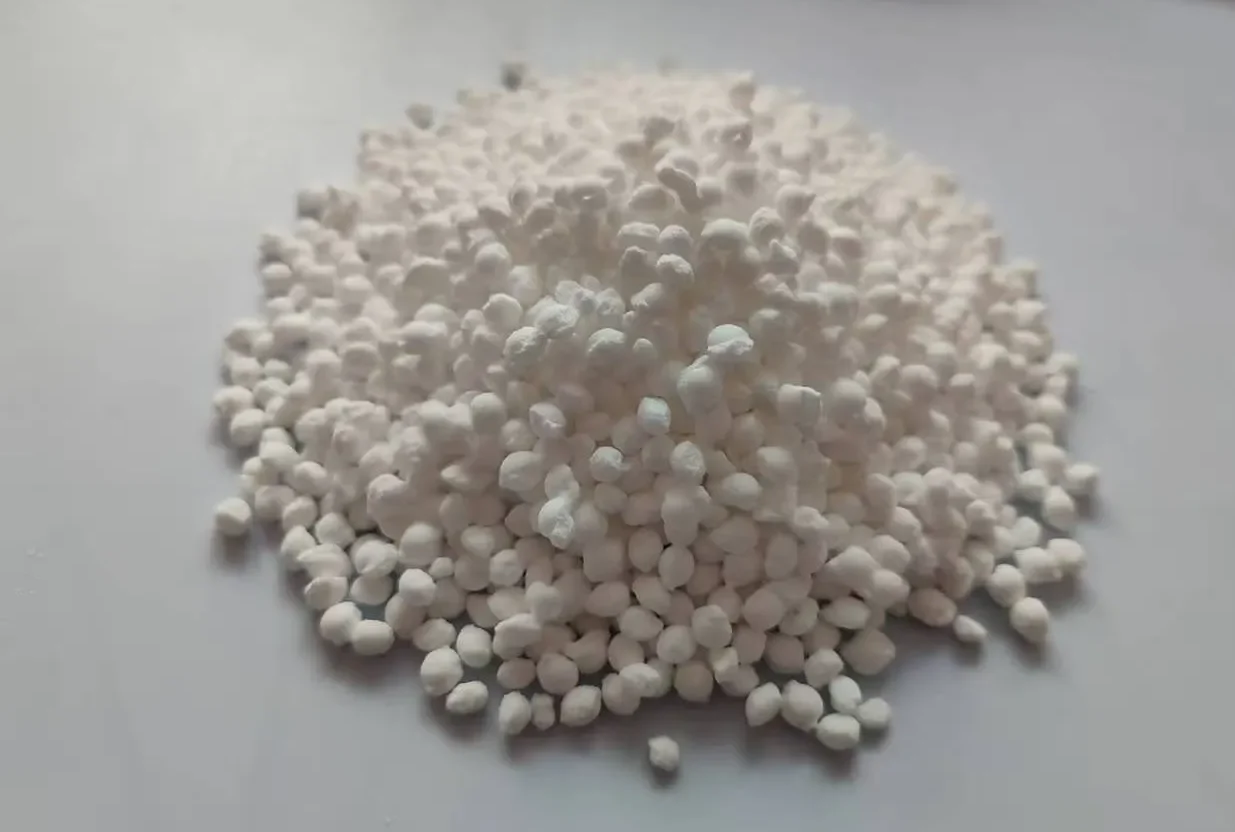
Potassium nitrate, also known as saltpeter, is a chemical compound commonly used in fertilizers, food preservation, and even fireworks. But what happens when this compound dissolves in water? Understanding the process of dissolution and the resulting products is crucial for various applications, from agriculture to chemistry experiments.

What is Potassium Nitrate?
Potassium nitrate (KNO₃) is a crystalline salt composed of potassium (K⁺) and nitrate (NO₃⁻) ions. It is known for its high solubility in water, which makes it an ideal choice for applications requiring a readily available source of potassium and nitrate ions.
Properties of Potassium Nitrate
Potassium nitrate is colorless, odorless, and has a slightly bitter taste. It is highly soluble in water, which means it can easily dissolve to form an aqueous solution. This property is particularly useful in agriculture, where potassium nitrate is used as a fertilizer to supply essential nutrients to plants.
Common Uses
- Fertilizers: Potassium nitrate is a key component in many fertilizers, providing essential nutrients that help plants grow.
- Food Preservation: It is used in curing meats due to its preservative properties.
- Fireworks: Potassium nitrate is a vital ingredient in pyrotechnics, providing the oxidizer necessary for combustion.
The Process of Dissolution
When potassium nitrate is added to water, it undergoes a process known as dissolution. During this process, the solid compound breaks down into its individual ions, which then disperse throughout the water.
Aqueous Dissociation of Potassium Nitrate
In the dissolution process, potassium nitrate dissociates into potassium ions (K⁺) and nitrate ions (NO₃⁻). This can be represented by the chemical equation:
KNO3(s)→K+(aq)+NO3−(aq)
- Potassium Ions (K⁺): These are positively charged ions that play a crucial role in plant growth and development.
- Nitrate Ions (NO₃⁻): These negatively charged ions are an important source of nitrogen, another vital nutrient for plants.
Solubility of Potassium Nitrate
Potassium nitrate’s solubility increases with temperature, meaning more of the compound can dissolve in water as the temperature rises. This makes it particularly useful in situations where a concentrated solution is required.

Neutral Solution
When potassium nitrate dissolves in water, it results in a neutral solution. This means that the solution has a pH level of around 7, which is neither acidic nor basic. The neutrality of the solution is because neither the potassium ions nor the nitrate ions significantly affects the pH of the solution.
Applications of Dissolved Potassium Nitrate
Agricultural Uses
In agriculture, the dissolved potassium and nitrate ions are readily available for plant uptake, making potassium nitrate an excellent choice for fertigation—applying fertilizers through irrigation systems. The nutrients are directly absorbed by the plant roots, enhancing growth and yield.
Chemical Experiments
In laboratory settings, dissolved potassium nitrate is used to study ionic interactions and conduct various chemical reactions. Its predictable behavior in solution makes it a reliable reagent for experiments.
Factors Affecting Solubility
Several factors can influence the solubility of potassium nitrate in water:
- Temperature: As mentioned, solubility increases with temperature.
- Pressure: While pressure has minimal effect on the solubility of solids, it can influence the dissolution rate.
- Purity of Water: Impurities in water can affect solubility and the rate at which potassium nitrate dissolves.
Practical Implications
Understanding these factors is essential for industries that rely on potassium nitrate’s solubility. For example, in agriculture, knowing how temperature affects solubility can help farmers optimize the use of fertilizers.
Environmental Considerations
While potassium nitrate is beneficial in many applications, it’s important to consider its environmental impact. Excessive use of fertilizers can lead to nutrient runoff, which can harm aquatic ecosystems. Therefore, it’s crucial to use potassium nitrate responsibly and in accordance with environmental guidelines.

Conclusion
Potassium nitrate is a versatile compound with a range of applications, from agriculture to fireworks. Its dissolution in water results in potassium and nitrate ions, which are essential nutrients for plants. Understanding the dissolution process and the factors affecting solubility can help optimize its use in various fields, ensuring both effectiveness and environmental responsibility.
By appreciating the chemistry behind potassium nitrate, you can make informed decisions whether you’re a farmer, scientist, or someone curious about chemical processes. Remember, responsible use is key to harnessing the benefits of potassium nitrate while minimizing its impact on our planet.
 English
 Arabic
 Spanish
 French