
Understanding the combustion properties of potassium nitrate, often referred to by its chemical formula KNO3, is essential for various applications, from fertilizers to pyrotechnics. This compound is a crucial ingredient in many industrial and scientific processes due to its role as a potent oxidizer. Let’s delve into the specifics of potassium nitrate’s heat release and combustion characteristics.
Potassium nitrate releases a significant amount of heat when it decomposes. As an oxidizer, it doesn’t burn by itself but facilitates the combustion of other materials. This property makes it invaluable in applications where a strong oxidizing agent is needed. Upon heating, potassium nitrate decomposes to release oxygen, which sustains the combustion of fuel.
The oxidizing capability of potassium nitrate plays a pivotal role in its burn temperature. While potassium nitrate itself doesn’t have a defined ignition temperature as fuels do, it decomposes at high temperatures to produce oxygen, which can intensify the burning of combustible materials. The presence of an adequate fuel source can elevate the combustion temperatures significantly.

Potassium Nitrate Thermal Decomposition
The thermal decomposition of potassium nitrate begins around 400°C (752°F). At this temperature, it starts breaking down into potassium nitrite and oxygen. This release of oxygen is what makes potassium nitrate an effective oxidizer. The process continues as the temperature rises, reaching a complete decomposition at approximately 550°C (1022°F).
Potassium Nitrate Combustion Temperature
When mixed with a combustible material, the combustion temperature can vary significantly. For instance, in pyrotechnic compositions, the burn temperature can exceed 1000°C (1832°F) due to the reaction between the fuel and the oxygen released by KNO3. This high-temperature capability is why potassium nitrate is commonly used in fireworks and gunpowder.
KNO3 Ignition Temperature
Although potassium nitrate itself does not ignite in the traditional sense, its decomposition provides the necessary oxygen for the ignition of other substances. For practical purposes, it’s essential to consider the ignition temperature of the fuel mixed with KNO3 to understand the overall ignition dynamics.

Potassium Nitrate Properties
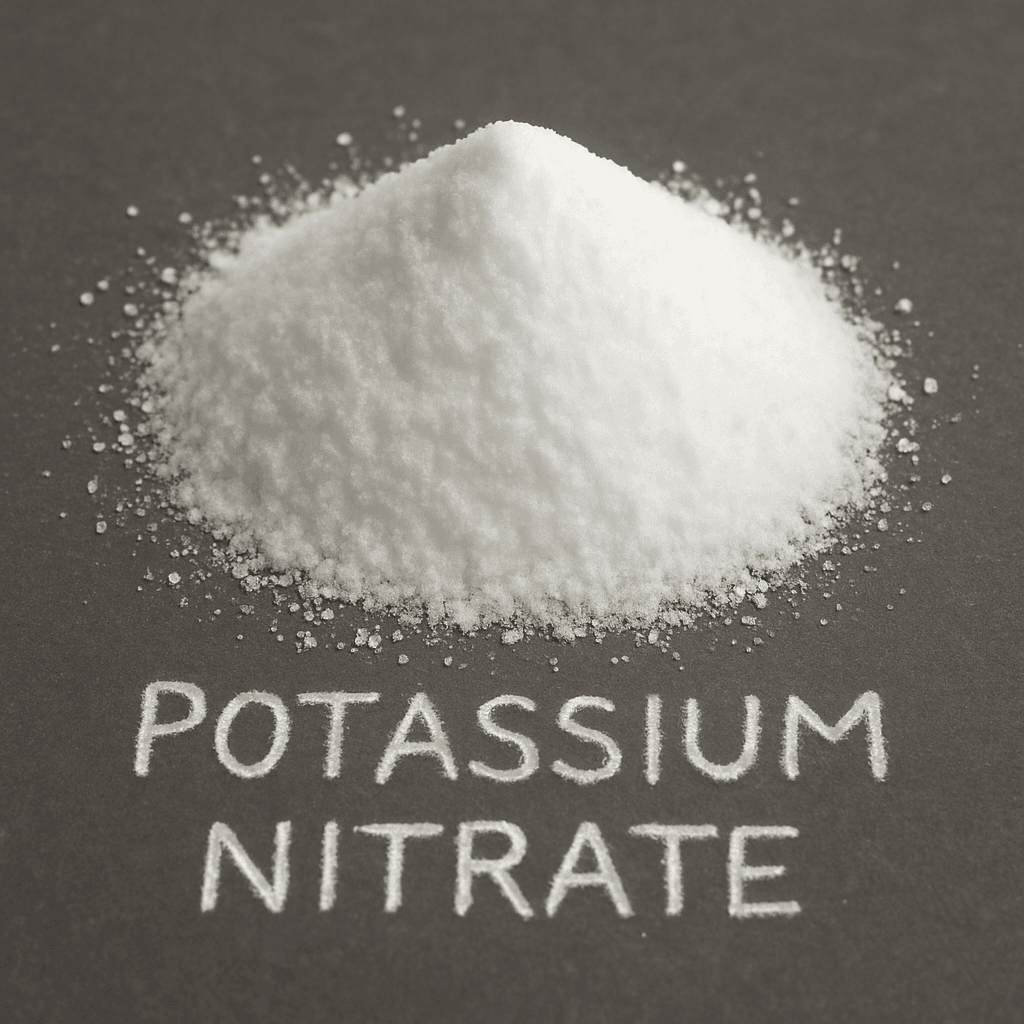
Potassium nitrate is a white crystalline solid, soluble in water and non-combustible by itself. Its primary role is to support combustion by providing oxygen. These properties make it suitable for various applications, including fertilizers, food preservation, and pyrotechnics.
Understanding the combustion characteristics and thermal behavior of potassium nitrate is crucial for safely handling and utilizing this compound in various applications. Whether you’re involved in industrial applications or scientific research, knowing how KNO3 contributes to combustion can enhance your processes and ensure safe practices.
 English
 Arabic
 Spanish
 French