
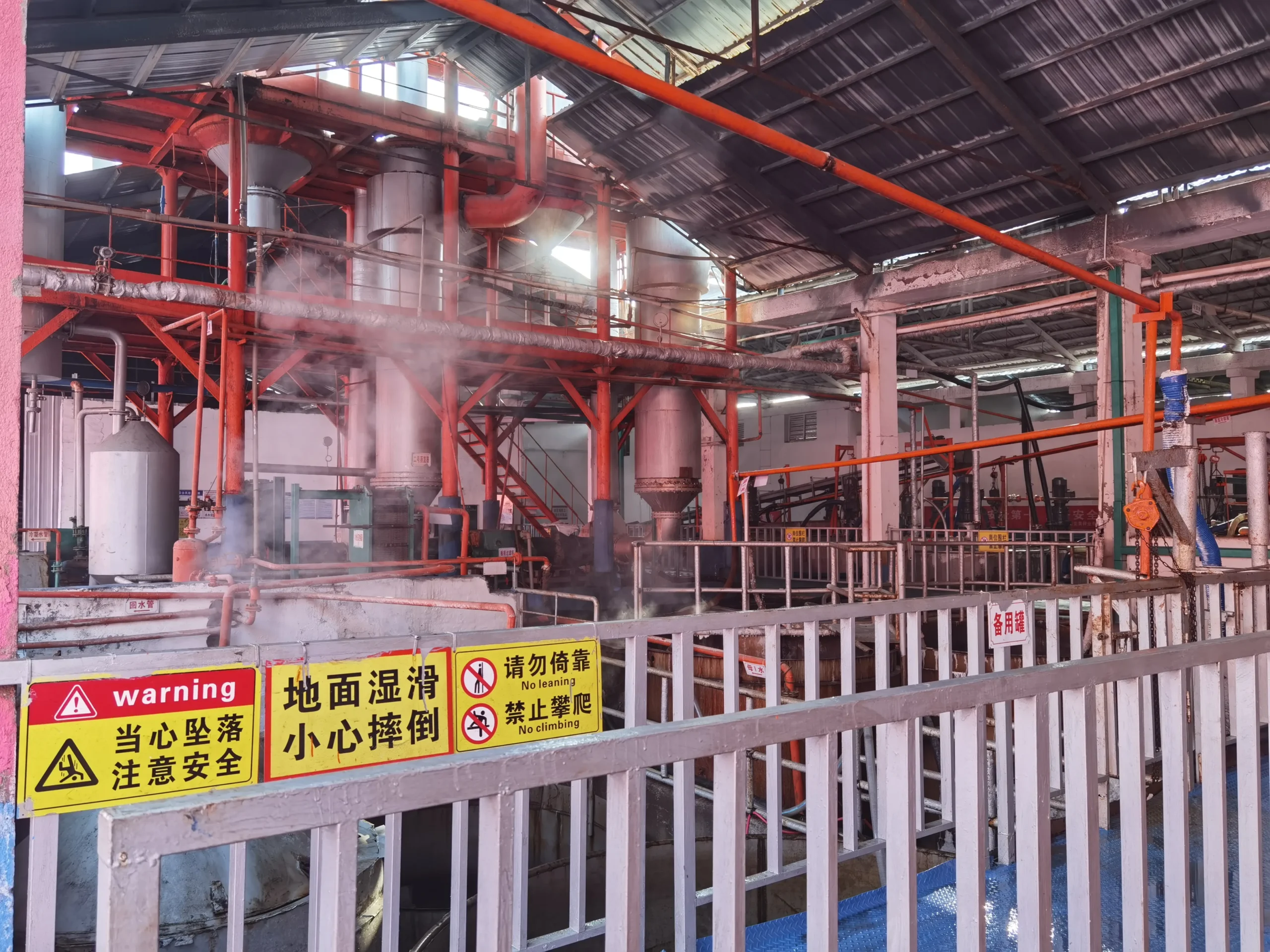
In the world of industrial chemistry, few compounds are as versatile and indispensable as potassium nitrate. From its critical role in agriculture as a key ingredient in fertilizers to its application in pyrotechnics and food preservation, potassium nitrate is a cornerstone of numerous industries. Yet, despite its widespread use, the journey from raw materials to the shelf-ready product is a complex and fascinating process. Understanding potassium nitrate manufacturing isn’t just about learning a formula—it’s about delving into the intricate dance of chemistry and engineering that brings this essential compound to life.
Peering into the depths of potassium nitrate production unveils a sophisticated tapestry of synthesis techniques and industrial processes. Each step—from raw material selection to final refinement—must adhere to stringent standards to ensure quality and safety. This exploration offers a unique window into how modern scientific advancements and traditional methods converge to optimize production efficiency. Whether you’re a seasoned chemist, an industry professional, or simply curious about the elements that fuel everyday life, unraveling the complexities of potassium nitrate manufacturing promises to be as informative as it is captivating.

Raw Materials Selection for Potassium Nitrate Manufacturing
Selecting the right feedstocks is the foundation of any successful potassium nitrate manufacturing operation. At the core of the potassium nitrate production process are two primary raw materials: a high-purity potassium source (often potassium chloride or potassium carbonate) and a reliable nitrate source (commonly nitric acid or sodium nitrate). The chemical quality, particle size, and moisture content of these inputs directly influence reaction yields, downstream processing, and final product performance.
Potassium chloride, sourced from natural brines or mined sylvite, must meet stringent impurity specifications to minimize the presence of sodium, magnesium, or sulfate ions. Similarly, nitric acid used in the synthesis must be of industrial grade (typically 60–68% concentration) with low levels of metals and organic contaminants. In some industrial potassium nitrate manufacturing setups, sodium nitrate can substitute nitric acid; however, this approach often requires additional purification steps to remove residual sodium ions.
Water quality also plays a critical role, as ultra-pure or deionized water prevents the introduction of unwanted ions that could precipitate or cause scaling in reactors. Trace amounts of iron, manganese, or calcium in process water can lead to unwanted side reactions or discoloration in the crystallized salt. Many plants incorporate inline water treatment systems—such as membrane filtration or ion exchange—to ensure that water meets tight conductivity and total dissolved solids (TDS) specifications.
Finally, understanding the supply chain dynamics and cost fluctuations of these raw materials is essential for process engineers. Bulk purchasing agreements, seasonal availability of natural brines, and geopolitical factors can all impact raw material pricing. By carefully monitoring these variables and maintaining strong supplier relationships, manufacturers can optimize both cost efficiency and consistent product quality throughout the potassium nitrate synthesis methods.
Industrial Processes Involved in Potassium Nitrate Synthesis
The industrial synthesis of potassium nitrate typically revolves around two primary routes: direct neutralization of nitric acid with a potassium base or double displacement between potassium chloride and sodium nitrate. Each method carries its own operational considerations, advantages, and limitations when scaled to meet high-volume demands.
In the direct neutralization route, concentrated nitric acid is gradually added to a slurry of potassium carbonate or hydroxide under controlled temperature and agitation. Reaction exothermicity must be managed carefully—often via external cooling jackets or internal coils—to maintain an optimal temperature range (25–35 °C) and prevent localized overheating. The resultant potassium nitrate solution is then clarified before crystallization.
Alternatively, the double displacement route involves mixing aqueous sodium nitrate with potassium chloride. Sodium chloride byproduct is separated by selective crystallization or flotation, leaving behind a potassium nitrate-rich solution. This method is particularly attractive when sodium nitrate is readily available or when the nitric acid supply is limited. However, the presence of chloride impurities demands rigorous purification to achieve high-purity grades.
Many modern facilities employ continuous reactors—such as plug flow or mixed-flow tubular designs—to maintain steady-state conditions and maximize productivity. Inline pH and conductivity sensors enable real-time process control, ensuring that ions remain within target concentrations. Scalability is often addressed through parallel trains of reactor–crystallizer setups, which allow manufacturers to adjust capacity incrementally without compromising product quality or plant safety.
Nitric Acid Production: Key Step in Potassium Nitrate Manufacturing
Nitric acid is arguably the most critical intermediate in the industrial potassium nitrate manufacturing chain. Its production via the Ostwald process—from ammonia oxidation to nitric oxide oxidation—sets the stage for efficient potassium nitrate synthesis. Understanding this upstream process is essential for any comprehensive look at potassium nitrate production.
Ammonia feedstock is first catalytically oxidized over a platinum-rhodium gauze at 900–950 °C, yielding nitric oxide (NO). This gas stream is then cooled and further oxidized to nitrogen dioxide (NO₂) before absorption into water to form nitric acid. Operating parameters—such as reactor temperature, pressure, and ammonia-to-air ratio—directly influence acid concentration and byproduct formation.
High-grade nitric acid (60–68%) is typically required for neutralization reactions in potassium nitrate synthesis. Lower concentrations can be concentrated via energy-intensive evaporation steps, which impact overall plant efficiency. Catalytic converter maintenance, heat recovery systems, and corrosion-resistant materials are all vital components of a robust nitric acid unit. By integrating waste heat from the Ostwald process into other plant areas—such as preheating feed solutions—manufacturers can significantly reduce energy consumption and lower operating costs.
Finally, the purity of nitric acid must be rigorously controlled. Trace metals and organic impurities can cause discoloration or unwanted side reactions during crystallization. Inline monitoring of acid strength, density, and potential contamination ensures that each batch of acid meets defined specifications for subsequent potassium nitrate production process steps.
Crystallization Techniques in Potassium Nitrate Production
Crystallization transforms the purified potassium nitrate solution into a solid form that meets specific particle size and morphological requirements. The choice of crystallization technique—be it evaporation, cooling, or seeded crystallization—affects product flowability, solubility, and application performance in fertilizers or pyrotechnic blends.
Evaporative crystallization involves concentrating the mother liquor under reduced pressure or vacuum to reach supersaturation, prompting nucleation and crystal growth. In contrast, cooling crystallization lowers the solution temperature to create supersaturation. Both methods benefit from controlled agitation, which prevents crystal agglomeration and ensures uniform size distribution. Seed crystals can be introduced to guide morphology and reduce random nucleation events.
Process engineers often employ multi-stage crystallizers or continuous crystallization loops to optimize yield and crystal quality. In a typical batch cycle, the supersaturated solution is held in a jacketed vessel while temperature and concentration are gradually adjusted. After sufficient growth, crystals are separated via centrifugation or filtration, washed with cold water to remove surface impurities, and dried.
Advanced facilities may use forced-circulation crystallizers, where solution is pumped through external heat exchangers and back into the crystallizer. This design enhances heat transfer rates and reduces residence time. By fine-tuning cooling profiles and seeding schedules, manufacturers can achieve narrow particle size distributions—a critical quality attribute for granular fertilizers and specialty applications.
Quality Control Measures for Potassium Nitrate Production
Maintaining consistent quality in industrial potassium nitrate manufacturing demands rigorous analytical testing and real-time monitoring throughout the production chain. From raw material inspection to final product release, each stage has defined quality control checkpoints to ensure compliance with specifications.
Incoming raw materials are analyzed for purity, moisture, and particle size. Standardized methods—such as titration for nitric acid strength or ion chromatography for impurity profiling—provide essential data before the synthesis begins. During reaction and crystallization, inline sensors measure pH, conductivity, and temperature to detect deviations that could compromise yield or purity.
After crystallization, bulk crystals are sampled to assess particle size distribution, moisture content, and bulk density. Automated laser diffraction instruments and moisture analyzers enable rapid feedback, allowing operators to adjust drying parameters or milling conditions. Final product samples undergo comprehensive testing: chloride and sodium ion concentrations, heavy metal limits, and water-soluble purity (often exceeding 99.5%).
Stability testing under various humidity and temperature conditions ensures that potassium nitrate remains free-flowing and retains its chemical integrity during storage and transport. Certificates of Analysis (COAs) are generated for each batch, documenting test results and verifying compliance with industry or customer-specific standards. By integrating these quality control measures into the manufacturing workflow, producers can deliver a reliably high-quality product to diverse markets.
Conclusion
Potassium nitrate manufacturing stands at the intersection of chemistry, engineering, and rigorous quality control. From raw material selection and nitric acid production to advanced crystallization and purification techniques, each step in the potassium nitrate production process is optimized for efficiency and product integrity.
As demand continues to grow in agriculture, pyrotechnics, and specialized industrial applications, ongoing innovations in industrial potassium nitrate manufacturing and synthesis methods will remain crucial. By understanding these complex processes, stakeholders can ensure sustainable, cost-effective, and high-purity production for years to come.
 English
 Arabic
 Spanish
 French