
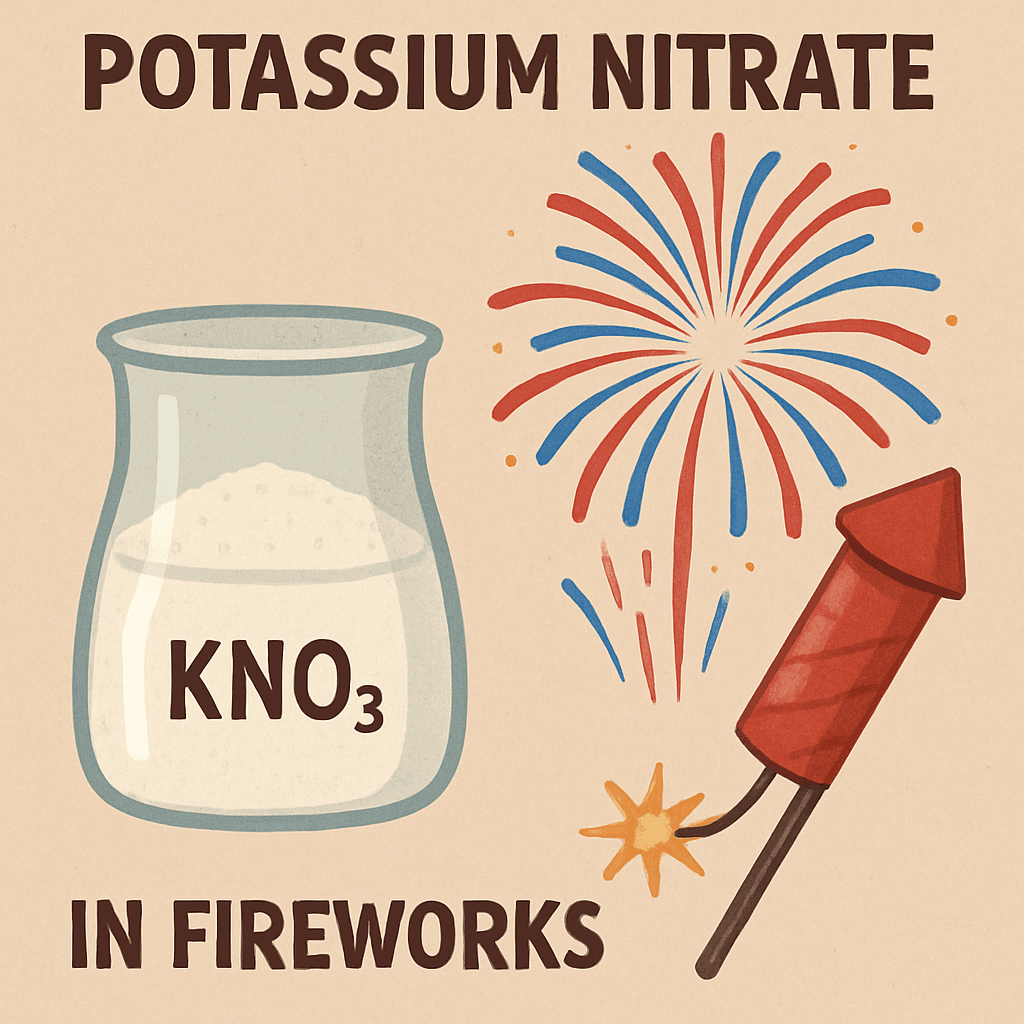
Creating fireworks is a captivating art that combines chemistry with craftsmanship. One of the key components in creating those mesmerizing stars you see bursting in the sky is potassium nitrate. In this article, we will delve into the role of potassium nitrate in firework star composition, how you can make fireworks stars with it, and the various uses of potassium nitrate in pyrotechnics.

What is Potassium Nitrate?
Potassium nitrate, also known as saltpeter, is a chemical compound with the formula KNO3. It is a naturally occurring mineral and is commonly used in fertilizers, food preservation, and, most notably, in the production of fireworks.
Potassium Nitrate in Firework Star Composition
In the world of pyrotechnics, potassium nitrate serves as an oxidizer. This means it provides the oxygen necessary for the combustion of other ingredients in a firework star. The presence of oxygen allows the fuel components to burn brightly and produce the vivid colors that make fireworks so enchanting.
Ingredients for Making Fireworks Stars
Before diving into the process of making fireworks stars with potassium nitrate, it’s essential to understand the basic ingredients involved:
- Potassium Nitrate: As mentioned, it acts as an oxidizer.
- Sulfur: This serves as a fuel to help sustain the combustion process.
- Charcoal: Another fuel that enhances the brightness and duration of the star’s burn.
- Binders: Materials like dextrin are used to hold the mixture together.
- Coloring Agents: These are metal salts like strontium carbonate for red, barium nitrate for green, and copper chloride for blue, which give the fireworks their color.
Making Fireworks Stars with Potassium Nitrate

The Process of Making Fireworks Stars
- Mixing Ingredients: Combine potassium nitrate, sulfur, and charcoal in a specific ratio. The typical ratio is 75% potassium nitrate, 15% charcoal, and 10% sulfur. This forms the base composition. Add coloring agents to the mixture according to the desired color of the star. For example, add barium nitrate for green stars.
- Creating a Damp Mixture: Use water or alcohol to dampen the mixture slightly. This helps in binding the ingredients together.
- Forming the Stars: Roll or press the dampened mixture into small spheres or cubes. Ensure they are consistent in size for uniform burning.
- Drying the Stars: Allow the stars to dry completely. This can take a few days, depending on humidity and temperature.
Safety Considerations
When making fireworks stars, safety is paramount. Always work in a well-ventilated area, wear protective gear, and follow all safety guidelines related to handling pyrotechnic materials.
Creating Colored Fireworks Stars with Potassium Nitrate
The magic of fireworks lies in their colors. By incorporating different metal salts into your potassium nitrate-based star composition, you can produce a spectrum of colors.
Common Coloring Agents
- Strontium Carbonate: Produces red colors.
- Barium Nitrate: Results in green hues.
- Copper Chloride: Gives a blue color.
- Sodium Nitrate: Results in yellow colors.
Experimenting with Colors
To create unique and vibrant displays, experiment with different combinations and concentrations of coloring agents. This requires patience and precision, as the balance of ingredients can significantly affect the resulting color.
Potassium Nitrate Uses Beyond Fireworks

While potassium nitrate is a staple in fireworks, it has several other applications:
Fertilizers
Potassium nitrate is a popular choice in agriculture as a fertilizer. It provides essential nutrients—potassium and nitrogen—to plants, promoting healthy growth and higher yields.
Food Preservation
Historically, potassium nitrate has been used in food preservation, particularly for curing meats. It inhibits the growth of bacteria, extending the shelf life of food products.
Medical Applications
In the medical field, potassium nitrate is used in toothpaste for sensitive teeth. It helps in desensitizing nerve endings, reducing discomfort.
How to Make Fireworks Stars Safely
Making fireworks stars is a rewarding endeavor, but it’s vital to prioritize safety at every step. Here are some tips:
- Proper Storage: Store all chemicals in a cool, dry place away from direct sunlight.
- Personal Protective Equipment: Always wear goggles, gloves, and a dust mask to protect yourself from harmful fumes and particles.
- Controlled Environment: Work on a non-flammable surface and keep a fire extinguisher nearby in case of emergencies.
Conclusion
Potassium nitrate plays a crucial role in the creation of firework stars, acting as an oxidizer that enables the brilliant colors and effects we associate with fireworks. By understanding the composition and process involved in making fireworks stars, enthusiasts can create stunning displays while ensuring safety and precision.
Whether you’re a hobbyist or a professional pyrotechnician, mastering the use of potassium nitrate in fireworks can lead to endless possibilities for awe-inspiring spectacles. Remember, safety should always be your top priority when handling pyrotechnic materials. Enjoy the art of fireworks responsibly and marvel at the beauty they bring to the night sky.
 English
 Arabic
 Spanish
 French