
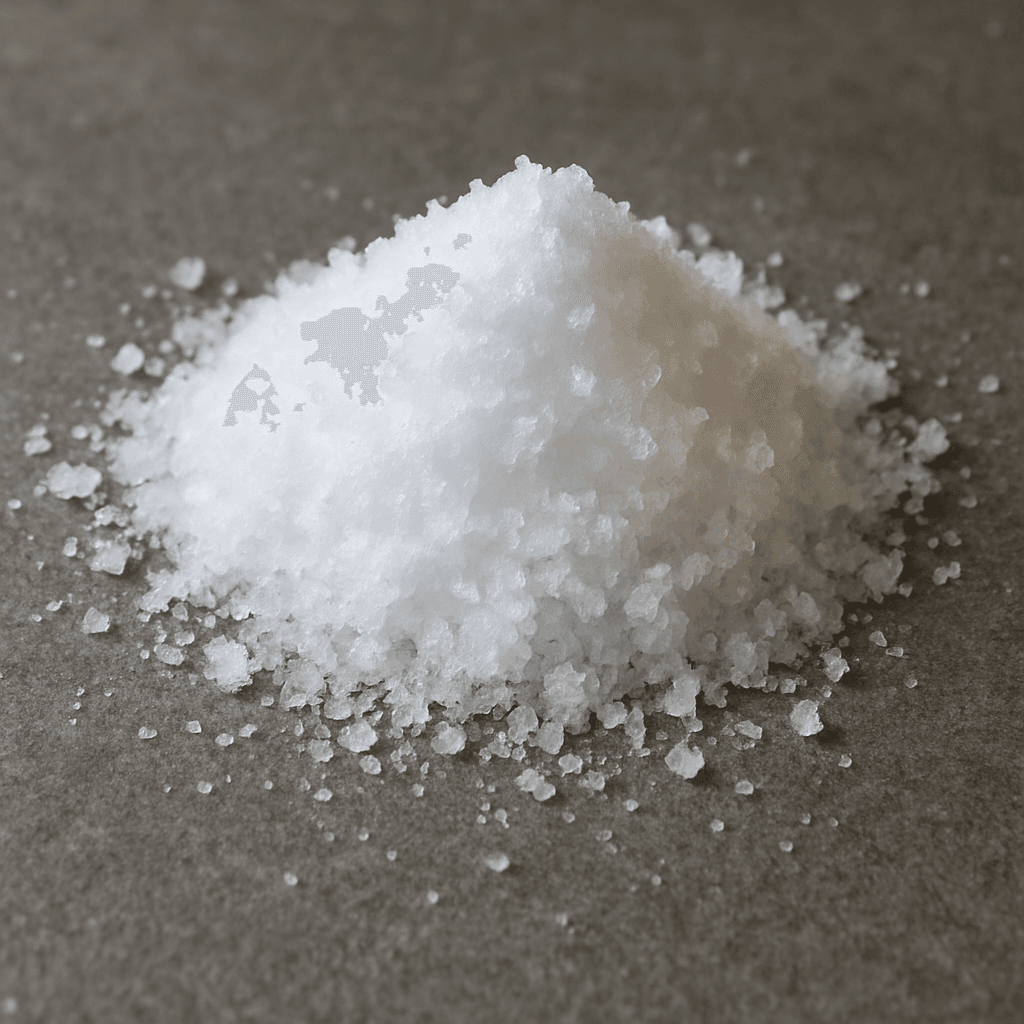
Crystallization is the process which a solid forms, where the atoms or molecules are organized into a structured pattern known as a crystal lattice. This organized structure is pivotal as it determines the inherent properties of the crystal, such as strength, solubility, and thermal stability. For potassium nitrate, this involves dissolving KNO3 in water until it reaches a saturation level. The solution is then allowed to cool, promoting the formation of solid crystals. The transition from a disordered to an ordered state involves nucleation and growth, fundamental steps that dictate the ultimate size and quality of the crystals formed.
Potassium Nitrate Solubility
The solubility of potassium nitrate plays a significant role in the crystallization process. Potassium nitrate is more soluble in hot water than in cold water. This temperature-dependent solubility is key for controlling crystallization, as it allows for precise manipulation of the solution’s saturation. As the temperature decreases, the solution becomes supersaturated, leading to nucleation, where crystal formation begins. This stage is critical because it sets the foundation for crystal growth, and any factors influencing solubility can directly alter the nucleation rate, impacting the final crystal characteristics.
The Impact of Cooling Rate

The cooling rate of the solution significantly affects the size and quality of the potassium nitrate crystals formed. A controlled cooling process can lead to the production of crystals with tailored properties, which is essential for specific industrial applications. Here’s how:
Fast Cooling
If the cooling rate is rapid, nucleation occurs quickly and leads to the formation of many small crystals. This is because the molecules do not have enough time to arrange themselves into larger structures. Rapid cooling can be advantageous when the goal is to produce fine crystals, which are often desired in applications requiring high surface area. However, this can also lead to defects within the crystal structure, affecting their mechanical and chemical properties.
Slow Cooling
On the other hand, a slower cooling rate allows for the growth of fewer, but larger crystals. The molecules have more time to align properly, leading to a well-ordered crystal structure. Larger crystals are often more desirable in applications where durability and slow dissolution rates are important, such as in some pharmaceutical formulations or fertilizers. This method also tends to produce purer crystals, as impurities are less likely to be incorporated into the well-formed lattice.
Factors Influencing KNO3 Crystallization
Several factors influence the crystallization of potassium nitrate, affecting the size, shape, and purity of the crystals. Understanding these factors allows for the customization of the crystallization process to meet specific needs and applications.
Saturation Level
The saturation level of the solution determines how much KNO3 can be dissolved before crystallization begins. A higher saturation level often leads to more significant nucleation, resulting in a greater number of crystals. Monitoring and adjusting saturation levels is crucial for optimizing crystal yield and quality. In industrial settings, maintaining precise control over saturation can enhance the efficiency of the crystallization process, reducing waste and improving product consistency.
Nucleation Rate
The nucleation rate is the speed at which new crystals begin to form. This is influenced by both the saturation level and the temperature of the solution. A high nucleation rate can lead to a large number of small crystals. Conversely, a lower nucleation rate, achieved through careful control of temperature and saturation, can result in fewer, larger crystals. This balance is essential for tailoring the crystallization process to produce the desired crystal size distribution.
Impurities Impact
Impurities in the solution can significantly impact crystal formation. They can interfere with the orderly arrangement of molecules, leading to defects in the crystal structure. This can affect the overall properties of the potassium nitrate crystals, such as their stability and solubility. In some cases, impurities can be deliberately introduced to modify crystal growth, a technique known as additive crystallization. However, for most applications, minimizing impurities is crucial for achieving high-quality crystals with consistent performance characteristics.
Crystal Size Control
Controlling the size of the crystals is crucial for various applications, from fertilizers to pyrotechnics. The size of potassium nitrate crystals can be controlled by manipulating the factors discussed above—cooling rate, saturation level, and impurity concentration. By understanding and adjusting these parameters, manufacturers can produce crystals that meet specific functional requirements.
Recrystallization Conditions
Recrystallization is a technique used to purify chemicals. By dissolving impure crystals in hot solvent and then slowly cooling the solution, larger and purer crystals form. This process can also help control the size and shape of potassium nitrate crystals. Recrystallization not only enhances purity but also improves the aesthetic and functional properties of the crystals, which is particularly important in industries where material quality is paramount, such as pharmaceuticals and electronics.
The Role of Potassium Nitrate Properties

Potassium nitrate has properties that make it an ideal substance for crystallization studies. Its solubility in water increases with temperature, which is a critical factor for controlled crystallization. This unique solubility profile allows for precise temperature control during the crystallization process, facilitating the production of crystals with specific characteristics. Understanding these properties allows scientists and industrialists to manipulate the crystallization process to achieve the desired crystal characteristics, optimizing both the efficiency and effectiveness of the process.
Practical Applications and Effects
The effects of potassium nitrate crystallization are not just limited to laboratory studies. They have practical implications in various industries, where the control of crystal size and purity can have a significant impact on product performance and cost-effectiveness.
Fertilizers
In the fertilizer industry, the size and purity of potassium nitrate crystals can affect how the product behaves in soil. Larger, purer crystals may dissolve more slowly, providing a longer-lasting nutrient source. This slow-release property can enhance plant growth and reduce the frequency of fertilizer application, leading to cost savings for farmers and reduced environmental impact.
Pyrotechnics
In pyrotechnics, the crystal size of potassium nitrate can influence the rate of combustion. Smaller crystals may burn faster, while larger crystals provide a slower, more controlled burn. This control over burn rate is crucial for achieving the desired effects in fireworks and other pyrotechnic displays, where precision and safety are paramount.
Pharmaceuticals
For pharmaceuticals, controlling the crystallization of potassium nitrate can impact the drug’s dissolution rate and bioavailability. Precise control over crystal size and purity is essential for ensuring consistent product performance. By tailoring the crystallization process, pharmaceutical manufacturers can optimize the therapeutic efficacy and stability of potassium nitrate-based formulations.
Conclusion
Potassium nitrate crystallization is a complex process influenced by various factors, including cooling rate, saturation level, and impurities. By understanding and controlling these factors, scientists and manufacturers can tailor the crystallization process to produce crystals with specific properties and applications. Whether for industrial or educational purposes, grasping the effects of potassium nitrate crystallization opens doors to numerous possibilities in science and technology. This knowledge not only enhances the practical utility of potassium nitrate but also contributes to advancements in materials science, leading to innovations that benefit society as a whole.
 English
 Arabic
 Spanish
 French