
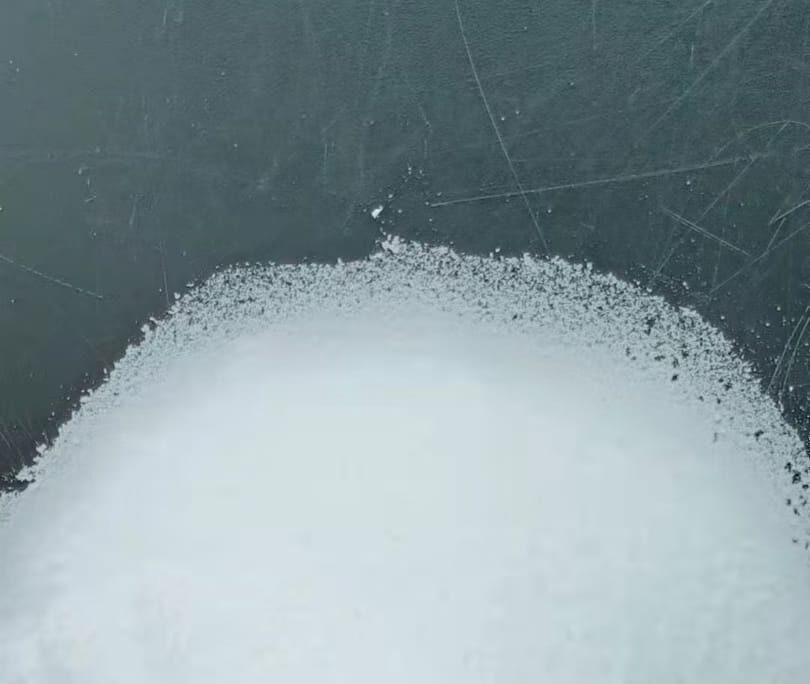
Potassium nitrate, commonly referred to as saltpeter, is an intriguing inorganic compound with significant roles in various scientific and industrial domains. Its ability to form aesthetically pleasing crystals is one of its most captivating features. These crystals not only serve as a visual delight but also provide insights into the underlying chemical processes. In this article, we delve into the formation of potassium nitrate crystals, examining the intricacies of crystal growth, the impact of solubility, and the principles behind recrystallization.

Potassium nitrate is an ionic compound composed of potassium ions (K⁺) and nitrate ions (NO₃⁻), with the chemical formula KNO₃. This compound has been utilized for centuries, finding applications in fertilizers due to its nutrient-rich potassium content, in food preservation for its antimicrobial properties, and in pyrotechnics for its oxidizing characteristics that produce vibrant fireworks. Its high solubility in water renders it an excellent subject for studying crystal formation, as it allows researchers and hobbyists to manipulate and observe crystal growth under various conditions.
The compound’s role in agriculture is crucial, as it provides a readily available source of nitrogen and potassium, essential nutrients for plant growth. In the realm of food preservation, potassium nitrate helps maintain the color and flavor of cured meats, while also inhibiting the growth of harmful bacteria. Its application in fireworks is perhaps the most visually striking, where it serves as a key component in the creation of bright, colorful displays. The versatility and widespread use of potassium nitrate underscore its importance in both historical and modern contexts.
Solubility and Crystallization
The solubility of potassium nitrate is a pivotal factor in the formation of its crystals. Solubility is defined as the maximum amount of a solute that can dissolve in a solvent at a specific temperature, and for potassium nitrate, this property is temperature-dependent. Understanding this solubility behavior is essential for controlling and optimizing the crystallization process.
The Role of Temperature
Temperature plays a significant role in the solubility of potassium nitrate. As the temperature of the solution increases, the solubility of potassium nitrate also increases, allowing more of the compound to dissolve. This relationship is depicted in its solubility curve, which shows a steep increase in solubility with rising temperatures. When a hot, saturated solution is slowly cooled, the solubility decreases, leading to the formation of crystals as the excess solute precipitates out of the solution.
The process of cooling must be carefully controlled to achieve desirable crystal characteristics. Rapid cooling may lead to the formation of small, imperfect crystals due to the quick precipitation of solute particles. Conversely, slow cooling promotes the development of larger, more well-defined crystals, as it allows adequate time for the orderly arrangement of molecules into a crystal lattice.
Supersaturation and Crystal Formation
Supersaturation is a critical phase in the crystal formation process. In a supersaturated solution, the concentration of solute exceeds its solubility limit at a given temperature, creating a metastable state where crystallization can occur. This state is achieved by dissolving an excess amount of solute at an elevated temperature and then cooling the solution without disturbing it.
During supersaturation, the tendency for potassium nitrate molecules to aggregate and form crystals increases significantly. This process, known as nucleation, involves the initial formation of small clusters of molecules that serve as “seeds” for further crystal growth. These seeds provide a template upon which additional molecules can deposit, leading to the development of visible crystals. The nucleation and growth phases are influenced by various factors, including the presence of impurities, the rate of cooling, and the degree of supersaturation.
Potassium Nitrate Recrystallization
Recrystallization is a widely used technique to purify chemical compounds by exploiting differences in solubility. This method is particularly effective for potassium nitrate, allowing for the production of high-purity crystals through a series of controlled steps.
Steps in Recrystallization
- Dissolving the Compound: The process begins by dissolving potassium nitrate in hot water to form a saturated solution. At this stage, any impurities present in the compound are less soluble and remain dissolved in the solution, ensuring that they do not contaminate the forming crystals.
- Cooling the Solution: The saturated solution is then allowed to cool gradually. As the temperature drops, the solubility of potassium nitrate decreases, prompting the pure compound to crystallize out of the solution. Slow cooling is crucial here, as it results in the formation of larger, more well-defined crystals by providing ample time for orderly molecular arrangement.
- Collecting the Crystals: Once crystallization is complete, the crystals are separated from the solution using filtration. The remaining liquid, known as the mother liquor, contains impurities and can be discarded or reused in subsequent recrystallization cycles.
Factors Affecting Crystal Growth
Several factors can influence the growth and quality of potassium nitrate crystals:
- Purity of the Compound: The presence of impurities can disrupt the orderly arrangement of molecules during crystal formation, leading to defects or smaller crystals. Ensuring high purity of the starting material is essential for obtaining well-formed crystals.
- Rate of Cooling: The rate at which the solution is cooled significantly impacts the size and quality of the crystals. Slow cooling favors the growth of larger, more uniform crystals, whereas rapid cooling may result in smaller, less defined crystals.
- Concentration of the Solution: A higher concentration of potassium nitrate in the solution enhances the likelihood of nucleation and subsequent crystal growth. However, the concentration must be carefully balanced to avoid excessive precipitation or the formation of amorphous solids.
Applications of Potassium Nitrate Crystals
Potassium nitrate crystals are not only visually appealing but also serve numerous practical applications across different industries. Their utility is harnessed in:
- Fertilizers: Potassium nitrate is a key ingredient in fertilizers, providing essential nutrients such as potassium and nitrogen to plants. These nutrients play vital roles in plant metabolism, enhancing growth and improving crop yields.
- Food Preservation: In the food industry, potassium nitrate is used as a preservative for cured meats. It helps maintain the color, flavor, and safety of these products by inhibiting the growth of bacteria that can cause spoilage.
- Pyrotechnics: Potassium nitrate is an essential component in the manufacture of fireworks and other pyrotechnic devices. Its oxidizing properties facilitate the combustion of other materials, resulting in the brilliant colors and effects seen in fireworks displays.
Experimenting with Potassium Nitrate Crystals
For those interested in exploring the fascinating world of potassium nitrate crystals, conducting a simple experiment at home can be both educational and rewarding. By following a structured method, you can observe the principles of crystallization firsthand.
Materials Needed
- Potassium nitrate
- Distilled water
- Heat-resistant container
- Stirring rod
- Heat source
- Filtration setup (such as a coffee filter)
Procedure
- Prepare the Solution: Begin by heating distilled water in a heat-resistant container. Gradually add potassium nitrate to the hot water while stirring continuously until no more can dissolve, creating a saturated solution.
- Cool the Solution: Allow the prepared solution to cool slowly at room temperature. During this cooling phase, crystals will start to form as the solubility of potassium nitrate decreases.
- Collect the Crystals: Once crystals have formed, carefully pour the solution through a filtration setup to separate the crystals from the remaining liquid. The collected crystals should be allowed to dry completely before further observation.
- Observe the Crystals: Examine the size, shape, and clarity of the crystals. Different cooling rates and conditions may result in variations in crystal structure, providing insights into the factors influencing crystal growth.

Conclusion
The formation of potassium nitrate crystals is a captivating process that exemplifies the principles of solubility, supersaturation, and recrystallization. By delving into these processes, one gains a deeper appreciation for the beauty and utility of these inorganic salt crystals. Whether for educational exploration, industrial applications, or the simple joy of growing crystals, potassium nitrate offers a remarkable window into the intricate world of chemistry. Through experimentation and observation, we can continue to uncover the secrets held within these crystalline structures, enriching our understanding of the natural world.
 English
 Arabic
 Spanish
 French