
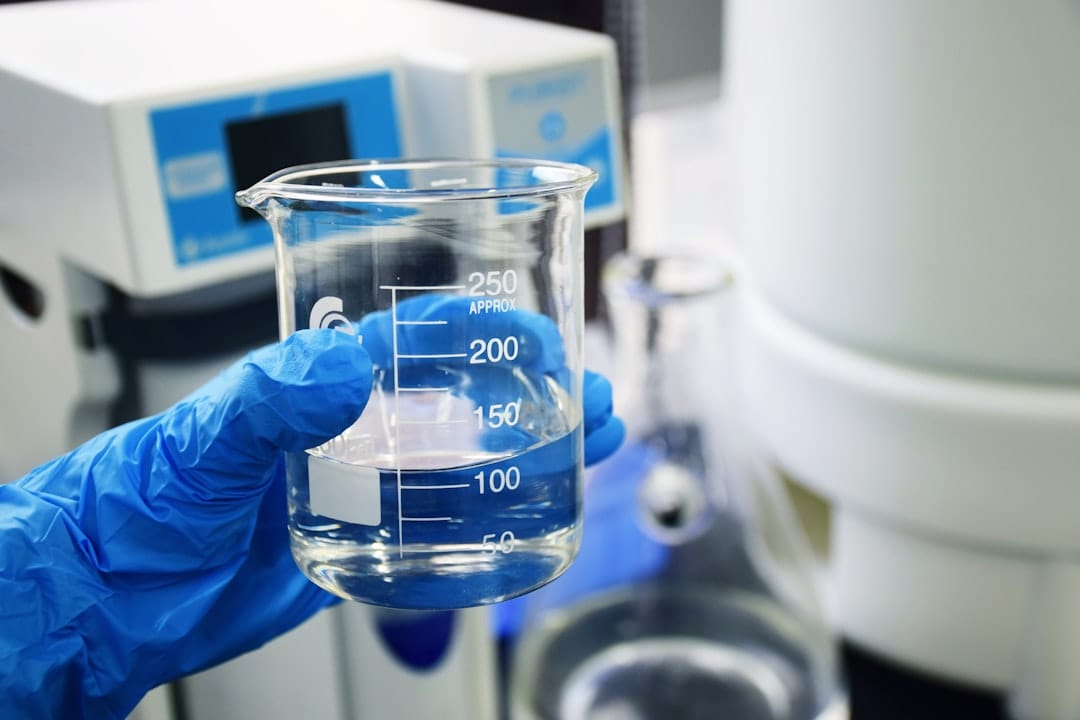
Potassium nitrate, often referred to by its chemical formula KNO3, is a widely used compound with applications ranging from fertilizers to food preservation. Its chemical versatility is matched by its fascinating physical properties, one of which is its ability to dissolve in water. This process is not only scientifically intriguing but also practically significant across various industries. This article delves into the dissolution of potassium nitrate in water, exploring the mechanisms, factors affecting solubility, and the endothermic nature of the process. Understanding these aspects offers valuable insights into its practical applications and the underlying chemistry.

Understanding the Basics: What is Potassium Nitrate?
Potassium nitrate is a chemical compound composed of potassium (K), nitrogen (N), and oxygen (O). It is a crystalline salt that appears as a white, powdery substance. This compound is highly valued in agriculture, serving as a key ingredient in fertilizers due to its high nitrogen content, which is crucial for plant growth and development. Additionally, it plays a vital role in the food industry as a preservative and curing agent, helping to maintain the quality and safety of food products. Its role in these industries underscores the importance of understanding its dissolution properties.
Beyond agriculture and food preservation, potassium nitrate has historical significance as well. It was a critical component of gunpowder, highlighting its impact on both historical and modern applications. Today, its uses have expanded into various fields, including pharmaceuticals and pyrotechnics, showcasing its multifaceted nature. The ability of potassium nitrate to dissolve efficiently in water is central to its functionality across these diverse applications, making it a compound of ongoing scientific interest and utility.
The Dissolution Process
What Does It Mean to Dissolve KNO3?
To dissolve a substance means to disperse its particles evenly throughout a solvent, forming a solution. In the case of potassium nitrate, the solvent is typically water. When KNO3 dissolves, the ionic bonds between its potassium ions (K+) and nitrate ions (NO3-) are broken, allowing these ions to interact freely with the water molecules. This interaction is crucial as it dictates the degree of dissolution and the concentration of the resulting solution.
The dissolution process involves an intricate interplay of forces. As the ionic bonds in KNO3 break, water molecules, with their polar nature, envelop the ions. This encapsulation by water molecules helps stabilize the ions in the solution, preventing them from recombining. The effectiveness of this process determines how well potassium nitrate can be used in various applications, from agriculture to manufacturing, where precise concentrations are essential.
The Role of Water as a Solvent
Water is known as the “universal solvent” because of its ability to dissolve a wide variety of substances, including salts like potassium nitrate. Its polar nature, with a partial positive charge on the hydrogen atoms and a partial negative charge on the oxygen atom, allows water molecules to surround and separate the ions in potassium nitrate, facilitating dissolution. This molecular behavior underscores water’s unique capability as a solvent, pivotal for numerous chemical reactions and processes.
The structure of water molecules enables them to form hydrogen bonds with the ions present in KNO3. This interaction is essential for breaking the ionic lattice of potassium nitrate, allowing it to dissolve efficiently. The role of water as a solvent is not only limited to facilitating dissolution but also extends to influencing the rate and extent of solubility, which can have significant implications in industrial applications where precise control over solution concentration is necessary.

Factors Affecting the Solubility of Potassium Nitrate
Temperature and Solubility
The solubility of potassium nitrate in water is highly dependent on temperature. As the temperature increases, the solubility of KNO3 also increases. This means that more potassium nitrate can be dissolved in water at higher temperatures. This relationship is crucial in various industrial applications where precise solubility control is required. The ability to manipulate solubility through temperature adjustments is a valuable tool in manufacturing and processing industries.
Understanding this temperature-solubility relationship helps in optimizing processes such as crystallization and dissolution, which are critical in sectors like pharmaceuticals and food technology. The increased kinetic energy at higher temperatures allows water molecules to more effectively break the ionic bonds in KNO3, thus increasing solubility. This principle is applied in industrial scenarios where dissolving large quantities of potassium nitrate efficiently is necessary.
Endothermic Dissolution
The dissolution of potassium nitrate in water is an endothermic process. This means that it absorbs heat from its surroundings during dissolution. As KNO3 dissolves, you may notice the solution feeling cooler to the touch. This cooling effect occurs because energy is required to break the ionic bonds in potassium nitrate, and this energy is absorbed as heat from the surrounding environment. This unique characteristic of KNO3 dissolution has practical implications in various scientific and industrial contexts.
Endothermic dissolution is an important consideration in processes that require temperature control. In laboratory settings, understanding the thermal dynamics of KNO3 dissolution can aid in designing experiments that account for temperature variations. In industrial applications, this property is leveraged to manage exothermic reactions by providing a cooling effect, highlighting the dual role of potassium nitrate in both active and passive thermal management.
Concentration and Saturation
Solubility is also influenced by the concentration of potassium nitrate already present in the solution. A solution reaches saturation when no more solute can be dissolved at a given temperature. Beyond this point, additional KNO3 will remain undissolved, settling at the bottom of the container. This concept of saturation is vital in industries that require precise solute concentration, such as pharmaceuticals and chemical manufacturing.
Understanding the saturation point is essential for optimizing the use of potassium nitrate in formulations where specific concentrations are needed. In agricultural applications, knowing the saturation level helps in preparing nutrient solutions with precise potassium nitrate content, ensuring optimal plant growth. Additionally, in laboratory settings, achieving saturation can be a critical step in experiments aiming to study the crystallization and recrystallization processes.
Practical Applications of Dissolving Potassium Nitrate
Fertilizers
One of the primary uses of dissolved potassium nitrate is in agriculture. As a fertilizer, it provides essential nutrients to plants, promoting healthy growth and increasing crop yields. The ability to dissolve KNO3 in water allows for its use in irrigation systems, delivering nutrients directly to the plant roots. This direct application ensures that nutrients are absorbed efficiently, leading to healthier and more robust plants.
In addition to its role in irrigation, potassium nitrate’s solubility facilitates its use in foliar feeding, where nutrients are applied directly to plant leaves. This method is particularly beneficial in situations where soil conditions are not ideal for nutrient uptake. By utilizing dissolved KNO3, farmers can ensure that plants receive the necessary potassium and nitrogen, even in challenging environmental conditions, thereby enhancing agricultural productivity.
Food Preservation
In the food industry, potassium nitrate is used to cure meats and preserve food products. Its dissolution in water facilitates its application in food processing, ensuring even distribution and effective preservation. The ability to maintain consistent concentration levels is critical for ensuring the safety and quality of preserved foods, preventing spoilage and extending shelf life.
The use of potassium nitrate in food preservation is governed by strict regulations to ensure consumer safety. Its solubility allows for precise control over its concentration in food products, enabling manufacturers to meet regulatory standards while achieving desired preservation effects. This careful balance is essential in maintaining the flavor, texture, and safety of preserved foods, highlighting the importance of understanding potassium nitrate’s dissolution properties.

Pyrotechnics
Potassium nitrate is a key component in the manufacture of fireworks and explosives. Its solubility in water allows for precise formulation and mixture with other components, ensuring the desired explosive effects. This precision is crucial in pyrotechnics, where the balance of ingredients determines the intensity and color of the explosion.
In addition to its role in fireworks, potassium nitrate’s solubility is leveraged in the production of smokeless powder and other explosive materials. The ability to dissolve and mix KNO3 with other components allows for the creation of controlled and predictable explosive reactions. This application underscores the importance of understanding the dissolution properties of potassium nitrate, as it directly impacts the safety and effectiveness of pyrotechnic products.
Experimenting with Potassium Nitrate at Home
For those interested in exploring the dissolution of potassium nitrate firsthand, a simple experiment can be conducted at home. By dissolving KNO3 in warm water and observing the cooling effect and the formation of a saturated solution, one can gain a deeper understanding of this chemical process. This hands-on experience is not only educational but also provides a tangible connection to the theoretical principles of chemistry.
Materials Needed
- Potassium nitrate (available in garden centers or online)
- Warm water
- Beaker or glass container
- Thermometer
- Stirring rod
These materials are easily accessible, making it possible for anyone to conduct this experiment at home. The use of basic laboratory equipment ensures that the process is safe and straightforward, allowing for a clear observation of the dissolution process and its effects.
Procedure
- Measure a specific amount of warm water and pour it into the container.
- Gradually add potassium nitrate to the water, stirring continuously.
- Observe the dissolution process, noting any temperature changes with the thermometer.
- Continue adding KNO3 until no more dissolves, indicating saturation.
This procedure not only demonstrates the principles of solubility and saturation but also highlights the endothermic nature of the dissolution process. Observing the temperature change provides a practical illustration of the energy dynamics involved in dissolving potassium nitrate, reinforcing theoretical knowledge with practical experience.
Conclusion
The dissolution of potassium nitrate in water is a fundamental chemical process with wide-ranging applications. From agriculture to food preservation and pyrotechnics, understanding how KNO3 dissolves and the factors that affect its solubility is essential for harnessing its potential. Whether for industrial purposes or simple home experiments, potassium nitrate continues to be a compound of significant interest and utility.
By exploring the dissolution of potassium nitrate, we gain insights into the fascinating interactions between solutes and solvents, the influence of temperature, and the unique characteristics of endothermic processes. These insights not only enhance our understanding of chemistry but also open doors to practical applications in everyday life. The knowledge gained from studying potassium nitrate’s dissolution can lead to innovations and improvements in various fields, demonstrating the ongoing relevance and importance of this chemical process.
 English
 Arabic
 Spanish
 French