
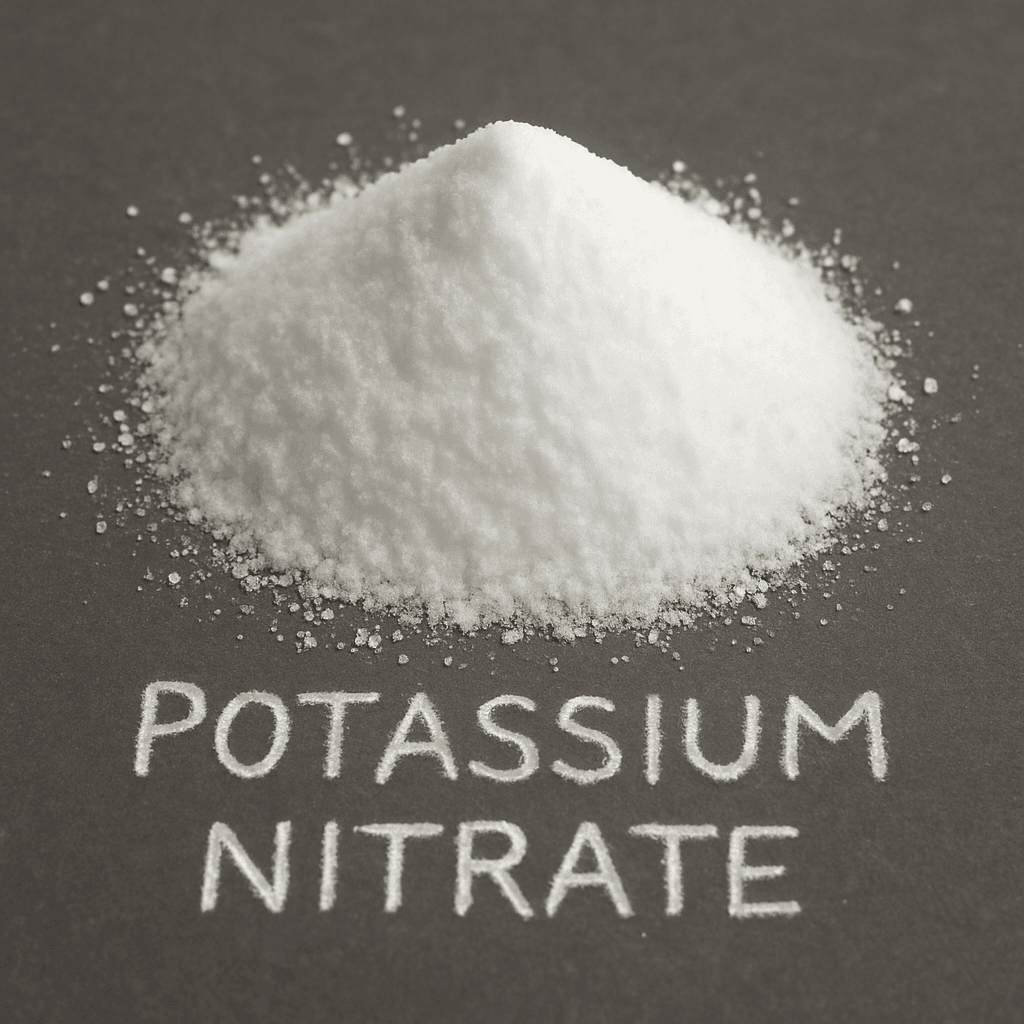
In the intricate world of chemistry, where complex formulas and reactions unfold, there lies a silent artist crafting nature’s very own sculptures. Have you ever marveled at the delicate intricacies of snowflakes or the geometric precision of a honeycomb? These natural phenomena captivate us with their beauty, yet hidden beneath their allure is a wondrous secret: the mesmerizing shape of potassium nitrate crystals. These crystals are not merely the result of chemical interactions but are masterpieces that embody nature’s penchant for pattern and order.
Journey with us as we delve into the crystalline structure of potassium nitrate, a compound more commonly known for its presence in fertilizers and gunpowder. While its practical applications are well-documented, the true marvel lies in its crystal formation—symmetric, defined, and astonishingly elegant. The world of these crystals invites both scientific inquiry and artistic admiration, encouraging us to look beyond the surface and appreciate the underlying elegance of natural patterns. In this exploration, we will uncover the processes that lead to such striking formations and the reasons behind their unique geometries. Get ready to be captivated by the subtle yet profound beauty of these extraordinary structures.

The Chemistry Behind Potassium Nitrate
Potassium nitrate (KNO₃) is a classic ionic salt composed of potassium cations (K⁺) and nitrate anions (NO₃⁻). At a molecular level, the nitrate ion features a trigonal planar geometry, meaning its three oxygen atoms are symmetrically distributed around a central nitrogen atom. This arrangement influences how individual ions pack together in the solid state, giving rise to recurrent patterns. KNO₃ is highly soluble in water, dissolving into its constituent ions, which then reassemble into crystals as the solution becomes saturated. It is this delicate dance of dissolution and recrystallization that sets the stage for the emergence of the striking, well-defined shapes we observe.
The ionic bonds in potassium nitrate are relatively strong yet flexible enough to allow ions to move past each other during formation. As conditions such as temperature or concentration shift, ions in solution align themselves in the energetically most favorable arrangement. The resulting lattice—known as the orthorhombic crystal system—dictates the characteristic elongated, prismatic forms of these crystals. By focusing on the shape of potassium nitrate crystals, chemists can glean insights into intermolecular forces, lattice energy, and even phase transitions. Understanding these chemical underpinnings not only enhances our appreciation of KNO₃’s utility but also reveals why its crystals emerge with such symmetry and precision.
Understanding Crystal Formation
Crystal formation is a two-stage process: nucleation followed by crystal growth. Nucleation begins when a supersaturated solution of potassium nitrate reaches a point where ions aggregate into tiny clusters. These clusters, or nuclei, serve as seeds for further growth. External factors such as temperature fluctuations, mechanical agitation, or the presence of microscopic particulates can trigger nucleation by providing sites for ions to anchor. Once nuclei are established, the growth phase dominates, with additional ions from the surrounding solution adhering to the existing lattice framework.
During the growth phase, the rate at which ions join the crystal lattice influences overall morphology. Rapid growth can lead to elongated, needle-like crystals, while slower, controlled conditions promote blockier, more equant forms. The orthorhombic symmetry of potassium nitrate means that growth rates along different crystallographic axes vary, resulting in characteristic prism-shaped crystals with well-defined edges. By carefully adjusting supersaturation levels and temperature, researchers can steer the process to favor particular crystal habits, shedding light on why the shape of potassium nitrate crystals can range from slender rods to stout prisms.
Factors Influencing Crystal Shape
Several factors interplay to determine the final shape of potassium nitrate crystals. Temperature is paramount: higher temperatures increase solubility but can also accelerate nucleation, leading to many small crystals rather than fewer large ones. Conversely, cooling a solution slowly encourages the formation of larger, more well-formed prisms. Concentration and supersaturation also play critical roles. A highly supersaturated solution can provoke uncontrolled nucleation, yielding numerous irregular crystals, whereas mild supersaturation favors orderly growth on existing nuclei.
Other influences include solvent composition and the presence of impurities. Adding certain organic molecules or salts can inhibit growth on specific crystal faces, causing anisotropic shapes or even hollow structures. Stirring or mechanical agitation can likewise alter crystal habits by disrupting the diffusion boundary layer around growing faces. Lastly, evaporation rate matters: slow evaporation provides a steady supply of ions to crystal surfaces, while rapid evaporation can lead to dendritic, branch-like morphologies. Together, these factors explain the diversity in the shape of potassium nitrate crystals observed in both laboratory and natural settings.
Applications of Potassium Nitrate Crystals
Potassium nitrate crystals find extensive use across industries due to their oxidizing properties and crystalline purity. In agriculture, finely ground KNO₃ serves as a high-efficiency fertilizer, delivering both nitrogen and potassium—essential nutrients for plant growth. The crystalline form ensures consistent solubility and controlled release, benefiting hydroponic systems and foliar sprays. In pyrotechnics, potassium nitrate acts as a key oxidizer in black powder and colored fireworks, where crystal size and shape can influence burn rate and flame color intensity.
Beyond these traditional roles, KNO₃ crystals are employed in food preservation—particularly in curing meats—owing to their antibacterial properties. They also appear in temperature-stabilizing thermal packs; when dissolved or recrystallized under controlled conditions, they absorb or release heat. In scientific research, the regularity of potassium nitrate’s crystal lattice makes it a model system for studies on phase transitions, lattice defects, and nonlinear optics. The consistent shape of potassium nitrate crystals thus underpins both practical applications and fundamental studies in materials science.
Exploring the Beauty of Natural Symmetry
Nature’s penchant for symmetry is exemplified in the regular forms of potassium nitrate crystals. Rooted in the orthorhombic crystal system, these prisms display three mutually perpendicular axes of unequal length, giving rise to distinctive, faceted geometries. This inherent order reflects a universal principle: systems tend toward configurations that minimize energy. In KNO₃, the efficient packing of ions achieves such minimization, producing straight edges and planar faces that catch the light like miniature gemstones.
The aesthetic appeal of these crystals transcends pure science, inspiring artists and photographers worldwide. Under polarized light, potassium nitrate prisms reveal vibrant interference colors, making them popular subjects in microscopy and decorative displays. The interplay of light and geometry underscores a deeper connection between mathematics, physics, and visual art. By admiring the shape of potassium nitrate crystals, we celebrate a microcosm of nature’s grand design—where chemical rules yield forms of exquisite regularity and beauty.
Conclusion
From the ionic bonds that assemble potassium and nitrate into an orthorhombic lattice to the environmental conditions that sculpt each prism, the shape of potassium nitrate crystals reveals the harmony of chemistry and geometry. These crystals exemplify how simple compounds can generate profoundly intricate patterns through natural processes.
Whether admired under a microscope or harnessed in fertilizers and pyrotechnics, KNO₃ crystals remind us that even the most utilitarian substances harbor hidden artistry. Embracing both their scientific significance and aesthetic allure, we gain a richer appreciation for nature’s capacity to blend form and function in equal measure.
 English
 Arabic
 Spanish
 French